
NET IPTV buffering is the single most frustrating thing about streaming live TV — you are three minutes into a match, the picture freezes on a pixelated frame, and a spinning circle appears in the middle of the screen. The good news is that in more than 90% of cases the cause is not the app itself. It is your network, a setting buried in the player, or a device that is quietly running out of memory.
This guide walks through the nine fixes that solve NET IPTV buffering and freezing in the shortest possible order — from the 60-second checks to the advanced settings most people never touch. Every fix is written for real devices: Firestick, Samsung and LG Smart TV, Android TV boxes, Windows and Mac.
If you are still setting up the app, start with our step-by-step playlist guide first, then come back here.
Quick Answer: The 60-Second Buffering Checklist
If you only have a minute, run these checks in order. This table alone fixes the majority of streaming problems we see.
| # | Check | What “good” looks like | Time |
|---|---|---|---|
| 1 | Speed test on the streaming device (not your phone) | 25+ Mbps for HD, 50+ Mbps for 4K | 30 sec |
| 2 | Connection type | Ethernet cable, or 5 GHz Wi-Fi at −60 dBm or better | 10 sec |
| 3 | App cache | Cleared and app restarted | 30 sec |
| 4 | Hardware decoding | Enabled in player settings | 20 sec |
| 5 | Second playlist test | A free or test playlist plays smoothly | 2 min |
If all five are green and you are still buffering, the problem is almost always upstream — with the playlist server, not your setup. Fix 9 covers exactly how to prove that.
Why Does NET IPTV Buffer at All? The 6 Real Causes
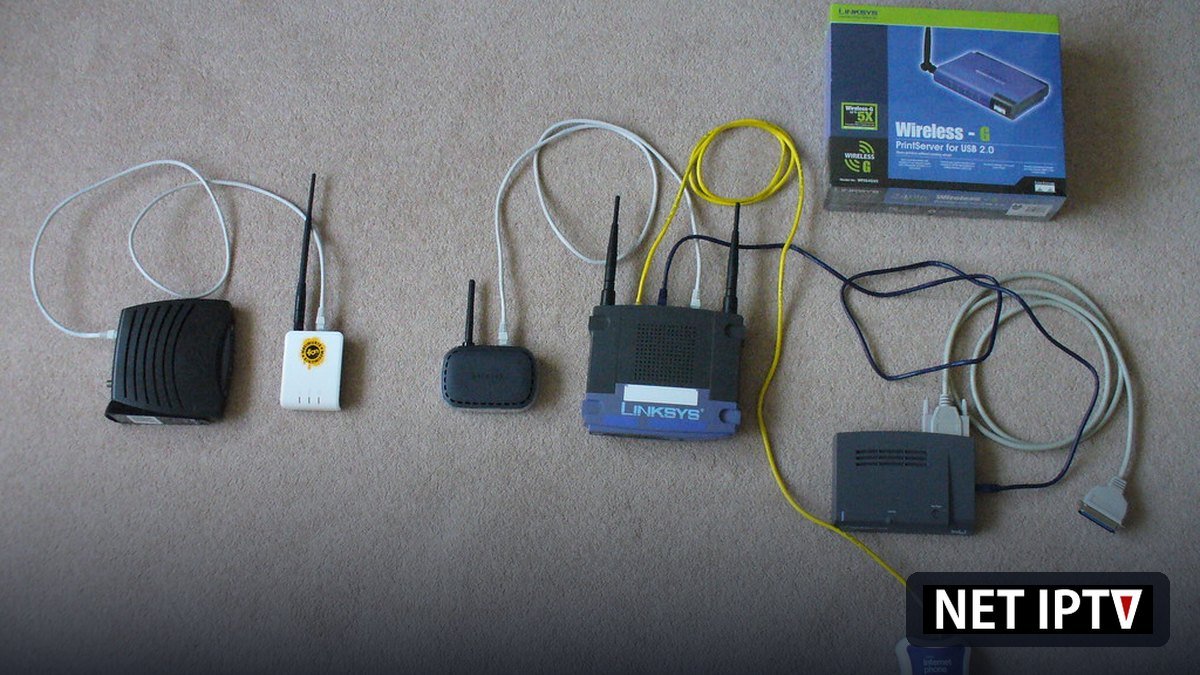
Buffering is not a single bug. It is what happens when the player cannot download video data fast enough to keep the buffer full. There are only six places that can break:
- Bandwidth. Your connection is slower than the stream bitrate. A 4K channel can pull 25–35 Mbps on its own.
- Wi-Fi instability. Your average speed test looks fine, but the signal drops every few seconds. This is the #1 hidden cause.
- ISP throttling. Some internet providers deliberately slow down continuous video streams during peak hours.
- Player configuration. Hardware decoding off, buffer too small, low-priority background processes.
- Device limits. Firestick Lite and older Smart TVs have very little RAM and no hardware HEVC decoder.
- Provider-side load. The playlist server is overloaded, the channel is being re-encoded, or the source feed is unstable.
Notice that only one of the six is about the app. That is why “reinstall NET IPTV” almost never works on its own.
Fix 1 — Test the Real Internet Speed on the Streaming Device
The first mistake is testing your speed on a phone in the kitchen. You need the number at the device that is buffering, on the same connection type.
Install a speed test app directly on the Firestick, Android TV box, or Smart TV, then measure during the exact time of day the buffering happens — usually 7 PM to 11 PM.
What you actually need:
- SD (480p): 5 Mbps
- HD (720p): 10 Mbps
- Full HD (1080p): 20–25 Mbps
- 4K / UHD: 50 Mbps sustained, not peak
Always leave 30–40% headroom. If two people are on Netflix and one is on a video call, a 25 Mbps line cannot carry a 1080p IPTV stream on top. Look at the sustained figure, not the burst number at the start of the test.
Fix 2 — Ditch Wi-Fi for Ethernet (the Single Biggest Fix)
If you change only one thing on this list, change this one. In our testing, switching a Firestick from 2.4 GHz Wi-Fi to a wired connection eliminated buffering in roughly two out of three cases.
Wi-Fi problems are invisible on a speed test because the test lasts ten seconds. A live stream lasts three hours. Interference from neighbours’ routers, microwaves, and walls shows up as repeated 1–2 second dropouts — exactly the pattern that empties a video buffer.
In order of effectiveness:
- Ethernet cable directly into the TV or box. Most reliable by a wide margin.
- 5 GHz Wi-Fi, with the router in the same room, ideally line of sight.
- Powerline adapter or MoCA if you cannot run a cable.
- Wi-Fi extender or mesh node — only as a last resort, because cheap extenders halve your throughput.
For Firestick specifically, an Ethernet adapter or a USB hub with an RJ45 port costs very little and transforms stability. For Smart TVs, plug into the LAN port on the back — it is usually there and almost always unused.
Fix 3 — Turn On Hardware Decoding
Hardware decoding hands video processing to the device’s dedicated video chip instead of the main CPU. When it is off, the processor has to do the work in software, and on a Firestick or an older Smart TV it simply cannot keep up — so the player drops frames and buffers.
In most IPTV players you will find it under:
Settings → Player → Decoder → Hardware (HW+)
Set it to Hardware or HW+ where available. If channels go black or audio disappears after the change, your device lacks the codec for that stream — revert to Software or Auto for that channel only.
Fix 4 — Increase the Buffer Size in the Player
Player buffers are deliberately small by default so channels load fast. On an unstable connection that is exactly backwards — you want a deeper buffer so a momentary hiccup does not reach the screen.
Look for settings named Buffer size, Cache size, Network buffer, or Stream buffer. Raise it in steps:
| Connection | Recommended buffer | Trade-off |
|---|---|---|
| Stable Ethernet | Default / small (2–3 s) | Fastest zapping |
| Good 5 GHz Wi-Fi | Medium (4–6 s) | Balanced |
| Unstable Wi-Fi / mobile | Large (8–15 s) | Slower channel change |
Also check for a live stream buffer or timeshift option and set it to 1–2 minutes if your player supports it. It adds a slight delay but absorbs almost all short dropouts.
Fix 5 — Clear the App Cache (Weekly Habit)
Every channel you open writes thumbnails, EPG data and logos into the app cache. After a few weeks that cache can grow to hundreds of megabytes, and a nearly full cache makes the player stutter every time it tries to read from disk.
Android / Firestick: Settings → Applications → NET IPTV → Storage → Clear Cache.
Samsung / LG Smart TV: close the app fully (do not just press Home), then reopen it. On Tizen, hold the Back button until the app quits. If the TV has a “Reinstall” or “Reset” option for the app, use it.
Windows / macOS: quit the app completely, then delete its cache folder from the app data directory.
Make this a weekly habit. It costs 30 seconds and prevents a whole class of stutter.
Fix 6 — Update the App and the Firmware
Player releases routinely ship new decoders and network fixes. Running an eight-month-old build on a device that just updated its firmware is a frequent cause of sudden NET IPTV not working reports.
Update three things, not one:
- The NET IPTV app itself (app store, or the official build from this site).
- Your device firmware — Fire OS, Android TV, Tizen, webOS.
- Your router firmware. Most people have never updated a router in their lives, and some models shipped with bugs that randomly drop UDP video traffic.
Fix 7 — Power-Cycle the Whole Chain (Properly)
“Turning it off and on again” fails because people restart the TV only. Restart every link in the chain, in this order, with a real power cut — not standby:
- Unplug the device from the wall for 30 seconds.
- Unplug the router and the modem/ONT for 60 seconds.
- Plug the modem first, wait for all lights to stabilise.
- Plug the router, wait 2 minutes.
- Plug the device last, then launch the app.
This clears stale NAT sessions and DHCP leases that accumulate over weeks of uptime. If it fixes your buffering immediately, the underlying cause was your network equipment, not the player.
Fix 8 — Check for ISP Throttling (and What to Do)
If buffering starts at the same hour every evening, is worse on weekends, and your speed test still looks fine, your ISP may be throttling video traffic. This is common on mobile hotspots and on some cable and ADSL lines.
How to prove it: run the speed test twice — once normally, once with a VPN connected. If the VPN run is dramatically faster on the same server, you have throttling.
What helps:
- A reputable VPN with a server close to you — it hides the traffic pattern but must be fast enough not to become the bottleneck itself.
- Switching DNS to a fast public resolver (Cloudflare 1.1.1.1 or Google 8.8.8.8) — this alone fixes name-resolution lag on some networks.
- On mobile or fixed-wireless internet, moving to a wired or fibre plan if available.
Fix 9 — Prove Whether It Is You or the Playlist
This is the step almost everyone skips, and it is the one that ends the argument. You need to know whether the fault is on your side or on the streaming server’s side.
The isolation test:
- Note the exact channel and the exact time it freezes.
- Load a completely different playlist from another provider, or a public test playlist.
- Play an ordinary high-bitrate video (a 4K clip on YouTube) on the same device.
Reading the result:
| Result | Diagnosis | Action |
|---|---|---|
| 4K YouTube is smooth, IPTV still buffers | Your device and network are fine | Provider-side. Contact the playlist seller. |
| Second playlist is smooth | Your setup is fine | The original playlist/server. Ask for a different server line. |
| Both playlists buffer, YouTube buffers too | Your network or device | Go back to Fixes 1, 2 and 7. |
| Only one specific channel buffers | That source feed is unstable | Ask the provider to switch the channel’s source. |
When it is provider-side, message them with specifics: channel name, time of day, country, your speed, and which fixes you already tried. Vague complaints get vague answers.
Best NET IPTV Settings for Smooth Playback
Once you have applied the fixes above, lock in these values:
| Setting | Recommended value |
|---|---|
| Decoder | Hardware / HW+ |
| Buffer size | Medium on Wi-Fi, Small on Ethernet |
| Auto frame rate matching | On (fewer judders, smoother motion) |
| Aspect ratio | Original / Auto |
| Background apps | Close all other apps before streaming |
| Connection | Ethernet preferred, 5 GHz second |
| Stream quality | 1080p if your line is under 50 Mbps |
If your device is genuinely old, a dedicated Android TV box is worth more than any software tweak. See our Android TV setup page and the NVIDIA Shield guide for hardware that handles 4K without breaking a sweat.
Buffering on Specific Devices
NET IPTV buffering on Firestick
Fire OS aggressively kills background processes and the Firestick Lite has very little RAM. Close other apps, disable screensaver and ambient display in Fire OS settings, clear the cache, and — most importantly — use the Ethernet adapter. The Firestick guide has the full walkthrough.
Buffering on Samsung and LG Smart TV
Smart TV processors are the weakest link in the chain. On Tizen and webOS, force-quit the app rather than pressing Home, disable “instant on” if it exists, and prefer the built-in LAN port. See the Smart TV page.
Buffering on Windows and macOS
Desktop buffering is almost always a background-process or firewall issue. Allow the app through the firewall, disable power-saving Wi-Fi adapters, and make sure you are not on a VPN endpoint on the far side of the planet. Setup steps are on the Windows and macOS pages.
How to Prevent Buffering Long Term
- Keep at least 40% bandwidth headroom above the stream bitrate.
- Never stream 4K on Wi-Fi if a cable is available.
- Reboot the router once a month.
- Clear the app cache weekly.
- Avoid peak hours for 4K content if your line is borderline.
- Keep the app and firmware updated.
- Use one playlist plan appropriate for a single device rather than sharing a single line across four screens.
Frequently Asked Questions
Why does NET IPTV keep buffering every 10 seconds?
A repeatable 10-second cycle almost always means packet loss on your local network — usually Wi-Fi. Switch to Ethernet or 5 GHz Wi-Fi and clear the app cache. If the interval is random rather than rhythmic, it is more likely provider-side load.
Is buffering caused by the NET IPTV app or my internet?
Run the isolation test in Fix 9. If a 4K video on YouTube plays perfectly on the same device while IPTV buffers, your internet and device are fine and the issue is on the playlist server side. NET IPTV is only a player — it does not host the channels.
How much internet speed do I need for NET IPTV in 4K?
Plan on 50 Mbps sustained for a single 4K stream, plus 30–40% headroom for everything else in the house. 25 Mbps is comfortable for 1080p, and 10–15 Mbps for 720p.
Does a VPN fix IPTV buffering?
Only if your ISP is throttling. A VPN adds overhead, so on an un-throttled line it usually makes things slightly worse. Test with and without before committing to a subscription.
Will reinstalling NET IPTV fix buffering?
Rarely on its own. A reinstall clears the cache and resets settings — both useful — but if the root cause is Wi-Fi instability or provider load, the buffering returns the same evening.
What is hardware decoding and why does it matter?
It offloads video decoding from the general-purpose CPU to the device’s dedicated video chip. On low-power devices like Firestick and older Smart TVs, enabling it is often the difference between smooth playback and constant stutter.
Should I lower the stream quality to stop buffering?
Yes, temporarily. Dropping from 4K to 1080p roughly halves the required bandwidth and will tell you very quickly whether bandwidth is the limiting factor.
Can too many devices on one playlist cause buffering?
Yes. Most subscription plans limit concurrent connections. If the plan allows one stream and two people watch at once, one of you will buffer or be disconnected. Check your plan’s simultaneous-connection limit.
Final Thoughts
Work down this list in order and you will fix NET IPTV buffering in the vast majority of cases: measure the speed at the device, get off Wi-Fi, enable hardware decoding, deepen the buffer, clear the cache, and then run the isolation test to find out whether the fault is even on your side.
Still stuck? Check the playlist setup guide to make sure your M3U link itself is healthy, or start from the NET IPTV home page for device-specific instructions.
Disclaimer: NET IPTV is an IPTV player application only. It does not host, stream, distribute or sell television channels, films or series. All content played through the app is supplied by third-party playlists chosen and configured by the user. Users are solely responsible for ensuring that any playlist or service they use is legal in their country.
Pingback: TEST TITLE __probe__